Listening, joining in and doing it yourself
How „Des Kaisers Nachtigall“ (The Emperor’s Nightingale) becomes a musical adventure for young and old
What is actually happening today? What is it about? “A nightingale,” one child knows before the concert. “An emperor,” adds another. Will the children get to go on stage themselves later? Nobody knows for sure yet.
One girl would rather be surprised anyway. She was at the theatre in Münster recently and afterwards knew one thing above all: “Mum, I want to go to a theatre again.” Her mother told her grandma, and so tickets for the family concert of the meetMUSIC Open Air ended up in the family.
A good decision, as this sunny Saturday afternoon will show.
In front of the stage in the park at Draiflessen, colourful beanbags are ready. This is where the youngest concertgoers take their seats, right up close to the action. Isabella van Hamme, Artistic Director of the meetMUSIC Open Air, opens the afternoon and first brings Nico Gutu onto the stage.
Gutu plays the accordion. The Instrument of the Year 2026 – and on this afternoon far more than a musical accompaniment.
Because in a moment it will become a nightingale. An imperial court. A twittering machine. And at some point even a whole conga line.
A golden book and a „Weißichnicht“ (“I-don’t-know”)
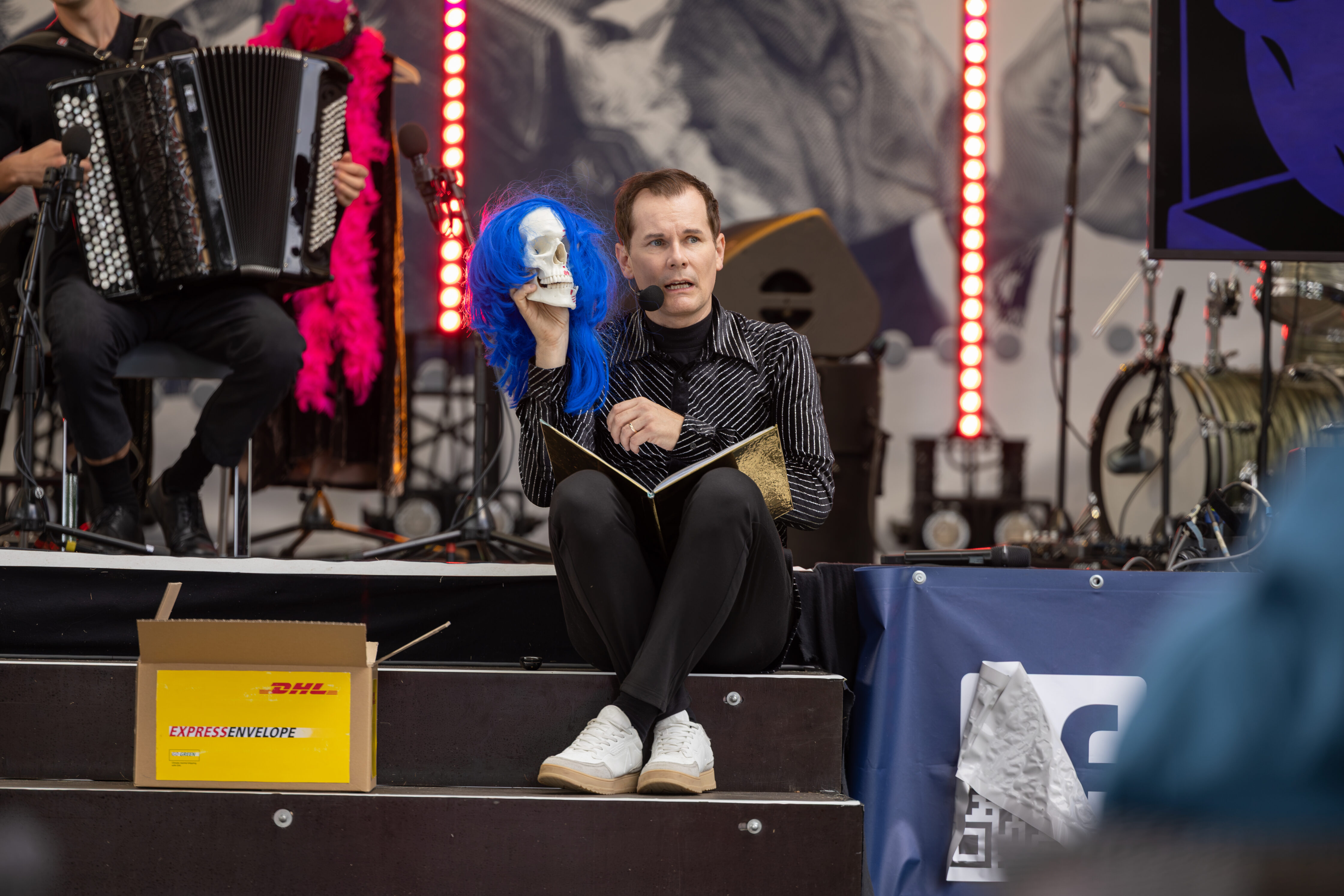
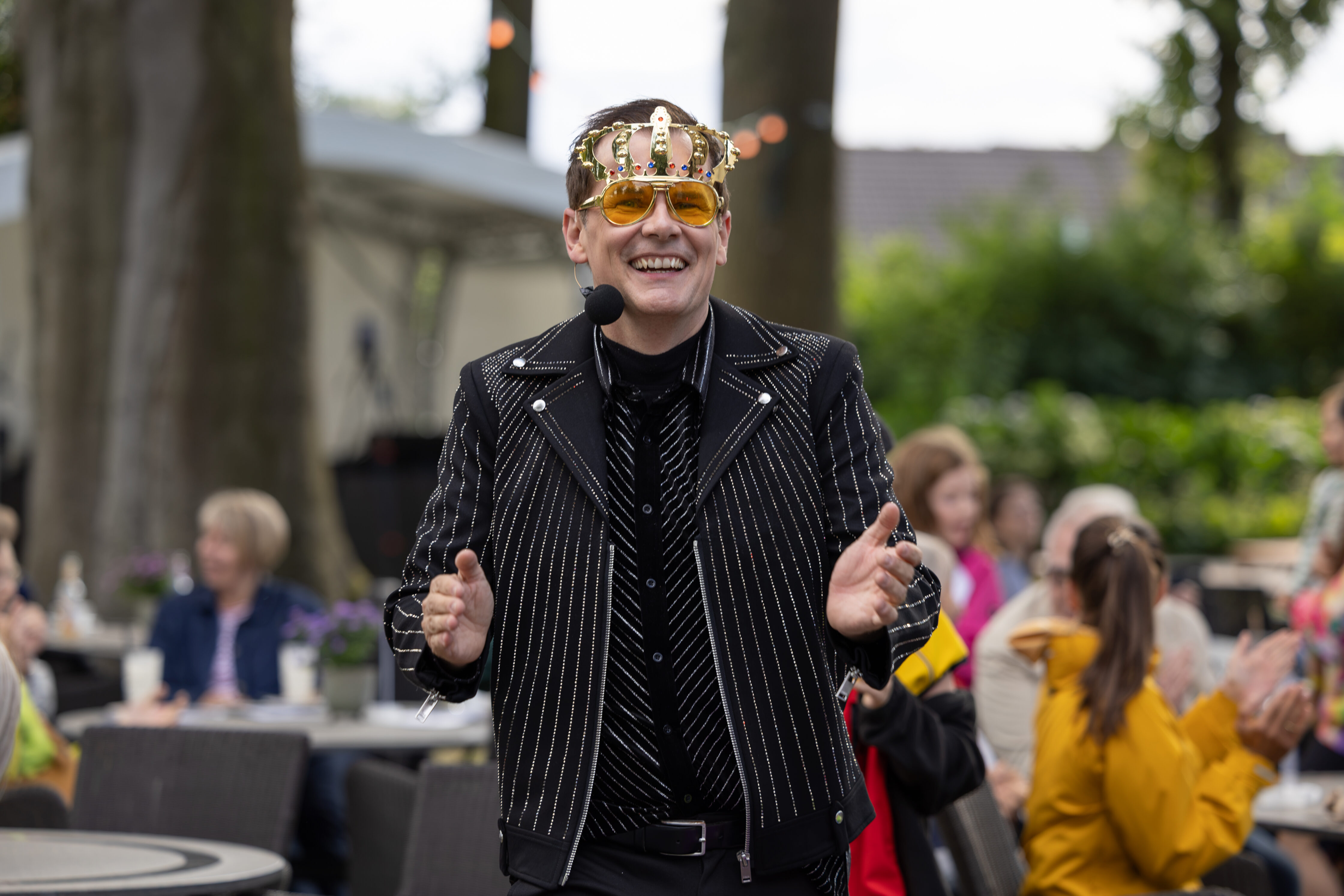
After the first piece of music, Malte Arkona comes onto the stage. His jacket glitters black and silver, in his hands he holds a golden book. But instead of sitting on the stage at a respectful distance from the audience, he sits down on the steps right next to the children.
And begins to tell the story.
„Des Kaisers Nachtigall“, the famous fairy tale by Hans Christian Andersen, becomes a musical story this afternoon. Malte narrates, Nico Gutu answers on his instrument. Music and language alternate, complement each other and draw the children ever deeper into the world of the emperor and his nightingale.
But it does not stay with listening for long.
Nico plays a note. Malte looks at the children: what kind of animal could that be?
“Weiß ich nicht” (I don’t know), comes one answer.
And a new creature is born: a „Weißichnicht“ – an “I-don’t-know”.
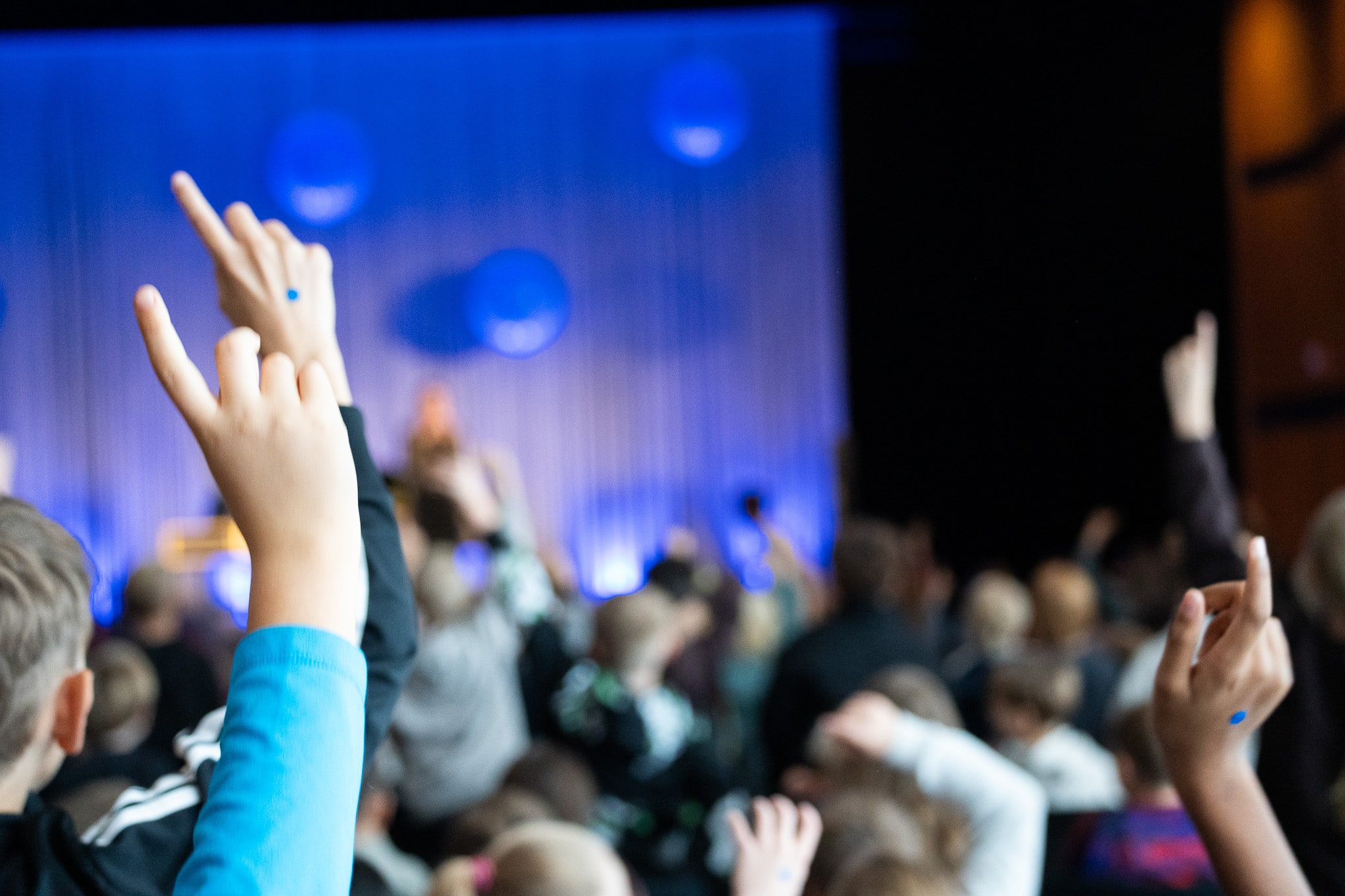
What might such an I-don’t-know look like? More children are asked, Nico plays new notes, and suddenly Andersen’s story also becomes a little bit the story of the children in front of the stage.
A nightingale with pink feathers
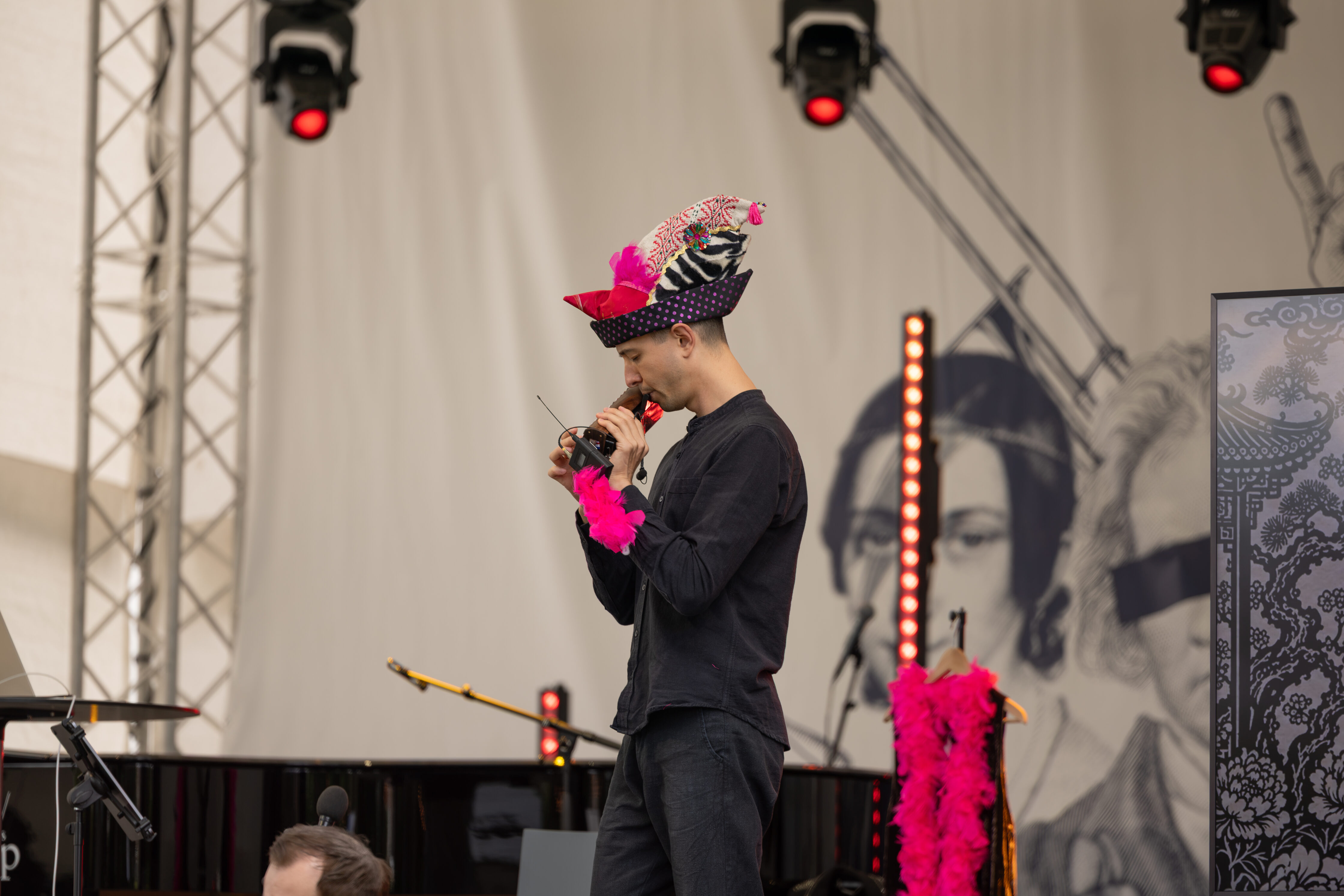
Then Nico Gutu changes instruments.
On the melodica, the real nightingale sings. And so that there is no doubt at all about who is singing, Gutu puts on a headdress with bright pink feathers every time.
The children laugh.
Malte continues the story: the emperor wants to receive the nightingale at his court. Of course, everything has to look immaculate for that.
So the narrator leaves his seat and promptly inspects the entire park.
Pretzel crumbs? Out of the question.
Please sit up straight.
Your phone? Put it away.
And of course the chairs have to be lined up properly, too.
After all, an important visitor is coming.
“The nightingale’s going to go cuckoo!”
More laughter.
That is exactly how this afternoon works. Malte Arkona does not tell the story in front of the children – he tells it with them. Again and again there are questions, answers, things to try out and roles to play.
When everyone in the fairy tale is “enchanted”, the first thing to clarify is what enchantment actually looks like. Left shoulder up. Right shoulder up. Now in time. That is how enchantment works.
Shortly afterwards, a whole park is twitching together with enchantment.
Zi-Zi-Zi. Kluck-Kluck-Kluck.
The artificial nightingale also makes its entrance at the imperial court.
One child promptly takes on the role of the DHL courier and delivers the parcel to the emperor. Inside: the sparkling artificial bird. A perfect little twittering machine that can play the same song over and over again.
And of course it needs its own sound, too.
“Zi-Zi. Kluck-Kluck.”
The audience tries it out.
Then it gets harder:
“Zi-Zi-Zi. Kluck-Kluck-Kluck.”
Malte divides children and adults into two groups. One takes the first rhythm, the other the second. Then they swap.
The listeners become a choir.
At times the children are completely silent, following spellbound as the story unfolds. A few moments later they are shouting, singing and moving along again with great enthusiasm.
Musically, too, the world of the fairy tale keeps changing. Alongside accordion and melodica, Nico Gutu uses a synthesizer, giving the damaged artificial nightingale its very own, slightly peculiar sound.
On the big screen, the emperor himself has his say every now and then.
One story, many worlds of sound – and the children right in the middle of it.
And suddenly a conga line winds through the park
But at some point things get serious in the fairy tale. The emperor is gravely ill. The artificial nightingale cannot help him.
The real one returns.
With its song, it finally achieves what the shiny artificial bird cannot: the emperor recovers.
And when an emperor cheats death once more, that naturally has to be celebrated.
Nico turns up the music.
Malte stands up.
And seconds later a conga line sets off.
Children join him and wind their way through the park beaming with joy, between rows of chairs and beanbags and back past the stage. The fairy tale has finally become a shared celebration.
After the concert, one adult visitor sums up what she particularly liked: “The narrator did a really good job – with the audience taking part. A really lively story.”
And one child also knows straight away what was special:
“I loved that we got to do so much.”
Now it’s the children’s turn
The end of the story is far from the end of this afternoon.
Because now the children are allowed to go where, before the concert, they did not know whether they would get to at all: right up to the instruments and even onto the stage.
Nico Gutu shows, explains and answers questions. Melodica, accordion and other instruments can be looked at up close and tried out. Anyone brave enough to take on the big accordion gets to sit on the stage to do so.
And suddenly it is the children who are making the sounds.
What was the best part? The answers after the concert come quite quickly:
“Playing ourselves.”
“When we were allowed to try it out.”
Another child names several things at once: “I thought the story was really good. The conga line was cool too.”
And when asked what they liked best of all, there is one more answer that makes any detailed concert review look rather pale:
“Everything.”
Perhaps that is also the most beautiful dramaturgy of this family concert.
At the beginning, the children sit on colourful beanbags, waiting eagerly to see what will happen on stage.
Then they are asked. They invent. Sing. Twitch. Play roles. Wind through the park together.
And in the end, they take the instruments into their own hands.
Listening turns into joining in. Joining in turns into doing it yourself. And a fairy tale turns into a shared musical adventure.